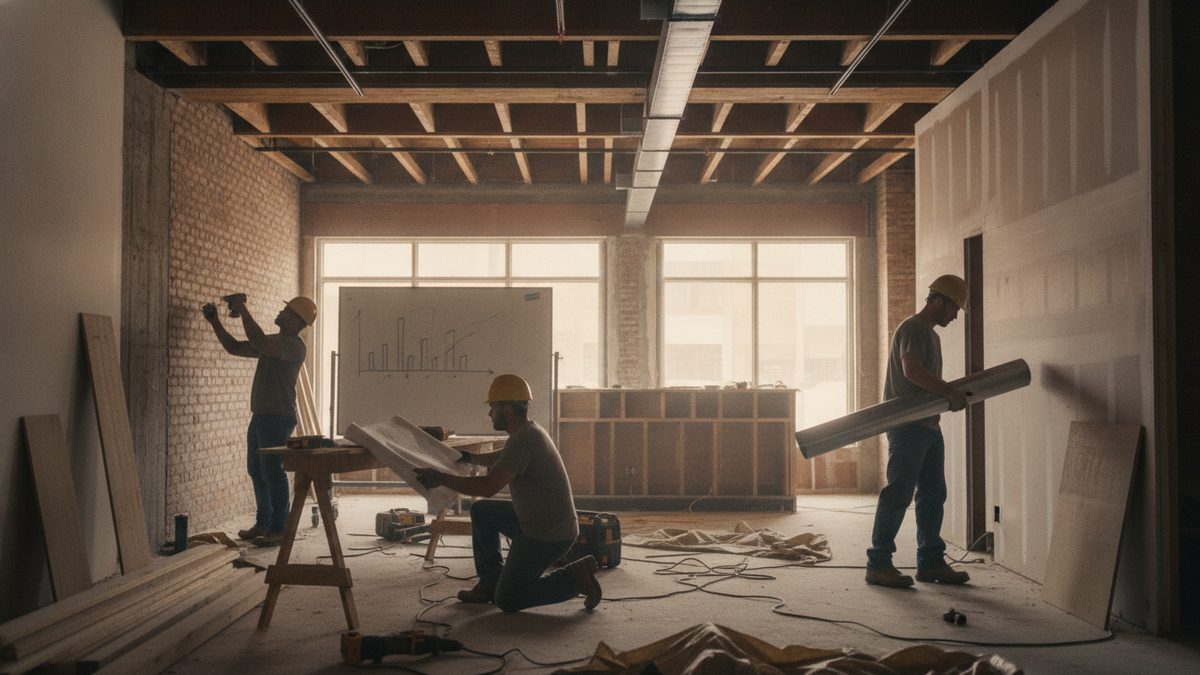
To build a restaurant construction budget, price the work by category (demolition, plumbing, electrical, HVAC and hood, finishes, equipment install), add 10% to 20% for contingency, then lay the work on a timeline of roughly 4 to 9 months from signed lease to opening day. Buildouts commonly land anywhere from about $100 to $400 or more per square foot depending on your city and whether the space was a restaurant before, so get bids before you trust any rule of thumb.
Why buildouts blow up
Most overruns are not bad luck. They come from hidden conditions (old plumbing, a grease line that does not exist, an underpowered electrical panel), permit delays, and owners changing the design after work starts. A second-generation space, one that was already a restaurant, usually costs far less because the grease trap, hood, restrooms and gas lines are already there.
Before you sign a lease, walk the space with a licensed contractor and ask what is missing. Pair that with your lease negotiation so you can ask for a tenant improvement allowance or free rent during construction.
The budget categories
| Category | What it covers | Typical share of buildout |
|---|---|---|
| Demolition and structural | Removing walls, floors, ceilings | 3% to 8% |
| Plumbing and grease trap | Sinks, floor drains, restrooms, gas | 10% to 15% |
| Electrical and lighting | Panel, circuits, fixtures | 8% to 12% |
| HVAC and hood | Ventilation, makeup air, fire suppression | 12% to 20% |
| Walls, floors, ceilings | Drywall, tile, paint, flooring | 10% to 15% |
| Millwork and seating | Bar, host stand, booths | 8% to 15% |
| Signage and exterior | Sign, awning, patio | 2% to 5% |
| Permits, design, fees | Architect, engineer, city fees | 5% to 10% |
Treat the shares as starting points. A bar-heavy concept spends more on millwork; a ghost kitchen spends almost nothing on the dining room. Kitchen equipment is usually budgeted separately, so use the equipment buying guide and roll both numbers into your startup budget.
Contingency: the line owners skip
Hold 10% for a second-generation space and up to 20% for a raw shell or an older building. Do not spend contingency on upgrades. It exists for surprises, and you will almost certainly use it. If your lender asks why the number is there, it is because they have seen buildouts before. See how to get restaurant financing for what lenders want to see in the construction budget.
A realistic buildout timeline
| Phase | Typical duration |
|---|---|
| Lease signed, design and drawings | 4 to 10 weeks |
| Permit review and approval | 4 to 16 weeks (varies widely by city) |
| Demolition and rough-in | 3 to 6 weeks |
| Inspections and close-up | 2 to 4 weeks |
| Finishes, millwork, equipment install | 4 to 8 weeks |
| Final inspections and certificate of occupancy | 1 to 4 weeks |
Phases overlap, which is why the total is 4 to 9 months rather than the sum of every row. The longest and least controllable item is almost always the permit. Submit complete drawings the first time, and read how to get a certificate of occupancy and licenses and permits you need to open before the architect finishes the plans.
How to control cost and schedule
- Get three bids from contractors who have built restaurants, not just retail.
- Fix the design early. Change orders are where budgets go to die.
- Order long-lead items first. Hoods, walk-ins and specialty equipment can take 8 to 16 weeks to arrive.
- Pay by milestone, not by calendar, and hold back a final payment until the certificate of occupancy is issued.
- Meet weekly with the contractor and keep a running change-order log.
Carrying costs while you build
Rent usually starts before you earn a dollar. Add every month of delay to your budget: rent, insurance, utilities and your own salary. A 2-month slip on a $9,000 monthly rent and $3,000 of other fixed costs is $24,000 you did not plan for. Put the slip into your plan using the calculator, and revisit it when the permit timeline becomes clear.
Budget the buildout in categories, hold 10% to 20% in contingency, and plan for the permit to take longer than anyone promises. Every month of delay costs you rent with no revenue.
Plan your opening technology early
Technology is cheap to sort out during construction and expensive to rush afterward. Decide where the POS stations, printers and network drops go while walls are still open. Cobblestone POS is free with no monthly fee, so it adds nothing to your buildout budget beyond hardware, while some competing systems run roughly $470 a month. Once construction wraps up, schedule your soft opening to test the room, the kitchen and the system together.
Quick checklist
- Walk the space with a restaurant contractor before signing.
- Price work by category and get three bids.
- Add 10% to 20% contingency.
- Include rent and carrying costs for the full timeline.
- Order long-lead equipment early.
- Pay by milestone and hold back final payment.
Use the attached calculator to total your categories, contingency and delay costs.
Free Restaurant Buildout Budget Calculator (Excel).