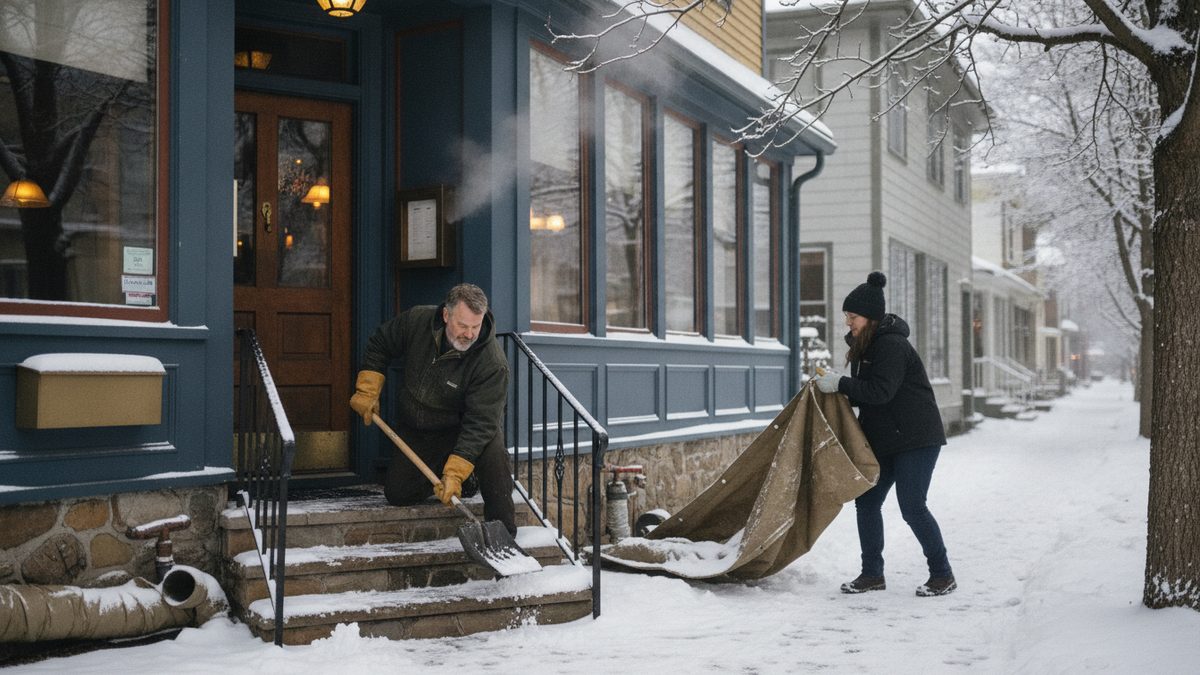
To prepare your restaurant for winter storms and frozen pipes, insulate exposed supply lines, seal drafts around walls and doors, service heating before the first freeze, keep the building warm even when closed, and write a simple storm plan covering staff, deliveries, ice removal and insurance. Do the inspections in October and November, because a single burst pipe can close a restaurant for weeks and cost tens of thousands of dollars.
Why October is the time to act
Freezes arrive faster than owners expect, and the damage is rarely the pipe itself. It is the water that pours out across the kitchen floor, ruins inventory, shorts electrical equipment and brings a health department closure. Preparing in the next four to six weeks costs a few hundred dollars. Reacting at 2 a.m. costs far more.
Pre-winter building checklist
Walk the whole property with a flashlight and a manager. Look especially at areas the heat does not reach: exterior walls, the back hallway, dry storage, rooftop units, grease trap enclosures and any outdoor plumbing.
| Area | What to check | Fix |
|---|---|---|
| Exposed pipes | Lines in walls, ceilings, crawl spaces | Foam insulation or heat tape |
| Doors and windows | Gaps, worn weather stripping | Seal or replace |
| Heating system | Filters, thermostats, pilot lights | Schedule a service visit |
| Roof and gutters | Clogged drains, loose flashing | Clear and repair |
| Outdoor spigots | Hoses attached | Disconnect, shut off, drain |
| Walk-in and reach-in units | Door gaskets, condensers | Inspect and clean |
| Water shutoff valve | Location known and working | Label it, test it |
Make sure at least three people know exactly where the main water shutoff is. In an emergency, shutting off water in the first minutes can prevent most of the damage. Put this on your equipment maintenance schedule so it happens every year.
When the cold snap hits
When forecasts drop below freezing for a stretch, take these steps the day before:
- Keep the heat on overnight at a minimum of about 55°F, even if you are closed for a day or two.
- Open cabinet doors under sinks on exterior walls so warm air reaches the pipes.
- Let faucets drip on the most exposed lines, since moving water is harder to freeze.
- Check dish machine and ice machine lines for slow flow, which is a warning sign.
- Move inventory off floors in rooms that could flood.
If a pipe does freeze, do not use an open flame. Shut off the water, open the faucet, and warm the pipe gently with a hair dryer or space heater placed safely away from anything flammable. Call a plumber if you cannot reach it.
Staff, deliveries and snow removal
Storm days test your systems more than your menu. Decide ahead of time who clears the entrance and sidewalk, how often, and with what. Many cities require sidewalks to be cleared within hours of a storm, and a slip on your ice is a liability claim. Stock salt or ice melt now, not after the forecast.
Plan for vendors too. Call your main suppliers and ask how they handle deliveries in snow, and consider a slightly larger order before a forecast storm, within your par levels, so you do not run out of key items. Our guide on handling supply chain disruptions has more on backup suppliers.
For your team, put a written policy in place before it is needed. A bad weather closure and call-out policy tells staff when you will close, how you will notify them and how shifts and pay are handled. It also prevents unsafe pressure on people to drive in dangerous conditions.
Power, insurance and cash
Winter storms often bring outages, so review how to prepare for a power outage, including what to do with refrigerated food and how to keep taking payments. Also read your policy. Ask your agent whether frozen pipe damage, spoiled food and lost income during closure are covered, and what the deductible is. See how to handle restaurant insurance for the questions to ask.
A burst pipe is the most preventable disaster in a restaurant. Know where the shutoff is, keep the heat on, and insulate before the first freeze.
Cold weather also changes demand. Delivery and takeout typically rise on storm days while dining room traffic falls, so consider a storm-day to-go special. If your outdoor seating stays open into the cold, see extending outdoor dining into winter. A POS that works offline and handles online orders well keeps revenue coming in. Cobblestone POS offers commission-free online ordering and reporting with no monthly fee, which helps you capture storm-day takeout without paying delivery-app commissions.
Quick checklist
- Insulate exposed pipes and seal drafts.
- Service heating and clear roof drains.
- Disconnect outdoor hoses and drain spigots.
- Label the main water shutoff and train three people.
- Keep heat on at 55°F or higher when closed.
- Stock ice melt and assign snow removal.
- Confirm insurance covers frozen pipes and lost income.
- Publish your bad weather policy to staff.