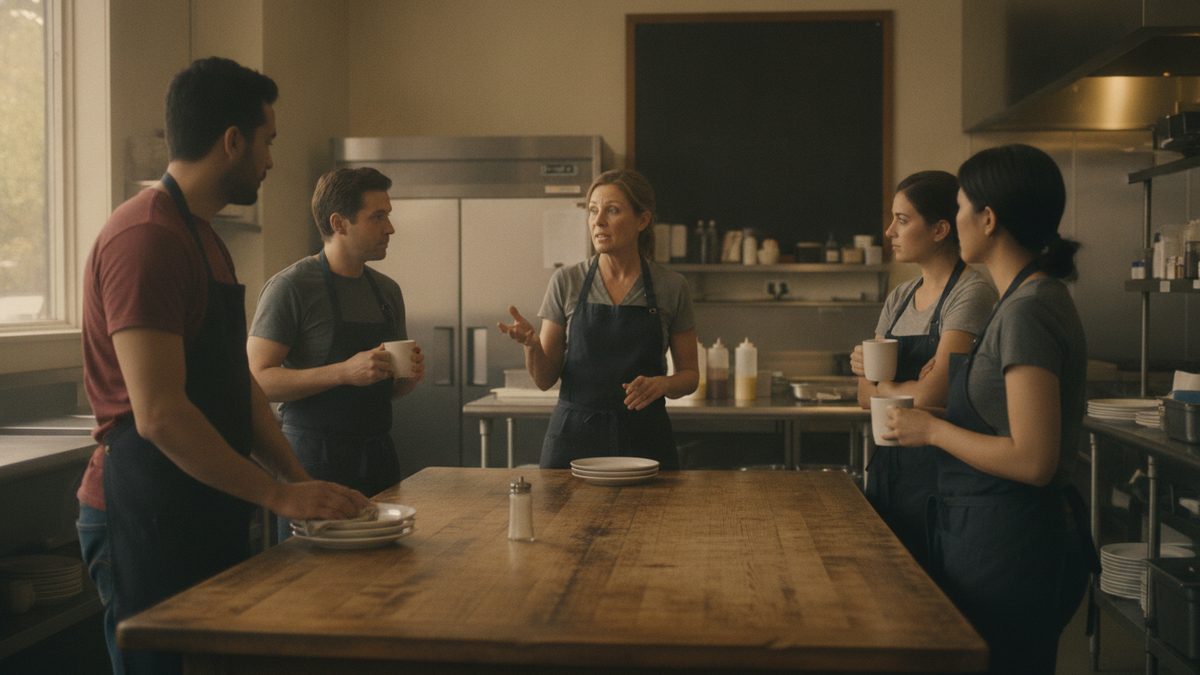
A sick employee policy for your restaurant should say which symptoms require staying home, when a worker must report illness to a manager, how long they stay out before returning, and how their shift gets covered. Under the FDA Food Code, food workers with vomiting, diarrhea, jaundice, sore throat with fever, or an infected wound must be excluded or restricted from work. A written policy keeps guests safe and gives managers an easy rule to follow.
Cold and flu season is starting, and holiday volume makes staff want to work through illness. Decide your rules now.
Why a written policy matters
A single sick cook can spread illness to many guests, trigger a health department investigation and damage your reputation. Staff often come in sick because they fear lost pay or a fight with the schedule. A clear policy removes that pressure. It also supports your health inspection readiness, since inspectors may ask about your illness reporting procedures.
Symptoms that require action
Check your local health department's current rules, which can be stricter than the federal model. As a general guide:
| Symptom or condition | Typical action |
|---|---|
| Vomiting or diarrhea | Exclude; return after 24 hours symptom-free |
| Jaundice | Exclude and notify the health department |
| Sore throat with fever | Exclude or restrict from food handling |
| Diagnosed norovirus, Salmonella, Shigella, E. coli, hepatitis A | Exclude until cleared |
| Cough, runny nose, mild cold | Restrict from food prep; keep away from open food |
| Infected cut or burn | Cover with bandage and glove, or reassign |
Build the policy step by step
- Define reportable symptoms and post them where staff clock in.
- Require notice to a manager at least 2 hours before the shift when possible, and immediately if symptoms start at work.
- Set return rules. For stomach illness, 24 hours symptom-free is a common standard. Some jurisdictions require clearance for specific diagnoses.
- Explain pay. If your area has paid sick leave laws, follow them. Even where not required, offering some paid sick time reduces the temptation to come in sick.
- Prohibit punishment for calling in with a legitimate illness, and keep attendance rules separate from sickness reports. See Reducing Absenteeism and Late Arrivals.
- Get signatures. Include the policy in your employee handbook and have every hire sign it at onboarding.
Plan coverage before people get sick
The hardest part of the policy is replacing the person. Cross-trained staff, an on-call list and an easy shift swap process make it realistic. Use Cross-Training Staff to Improve Flexibility and How to Set Up a Shift Swap and Time-Off Request Process. Managers should know which roles can be covered by a lead or by the owner. For general call-out rules, see How to Create a Bad Weather Closure and Call-Out Policy.
Handling someone who gets sick mid-shift
Send them home, have them wash and leave the food area immediately, and discard any food they handled with bare hands if the illness is a stomach bug. Sanitize their station using your kitchen cleaning and sanitation schedule. Log the incident with date, symptoms and action taken.
Takeaway: If a sick worker feels safe telling you, you can protect your guests. Make staying home easy and coming in sick the rule that gets enforced.
Count the cost honestly
One missed shift costs far less than an outbreak. A typical foodborne illness complaint can mean closure, lost sales and legal cost that dwarfs payroll for a replacement. Compare options with How to Calculate the True Cost of a New Hire when you consider adding a floating team member for flu season.
Use technology to keep coverage simple
When someone calls out, you need to see who is available and how hours stack up. Cobblestone POS is a free, all-in-one POS for independent restaurants with built-in employee scheduling, time tracking and reporting, so you can fill a sick call fast without watching overtime. There is no monthly fee, compared with roughly $470+ per month for Toast.