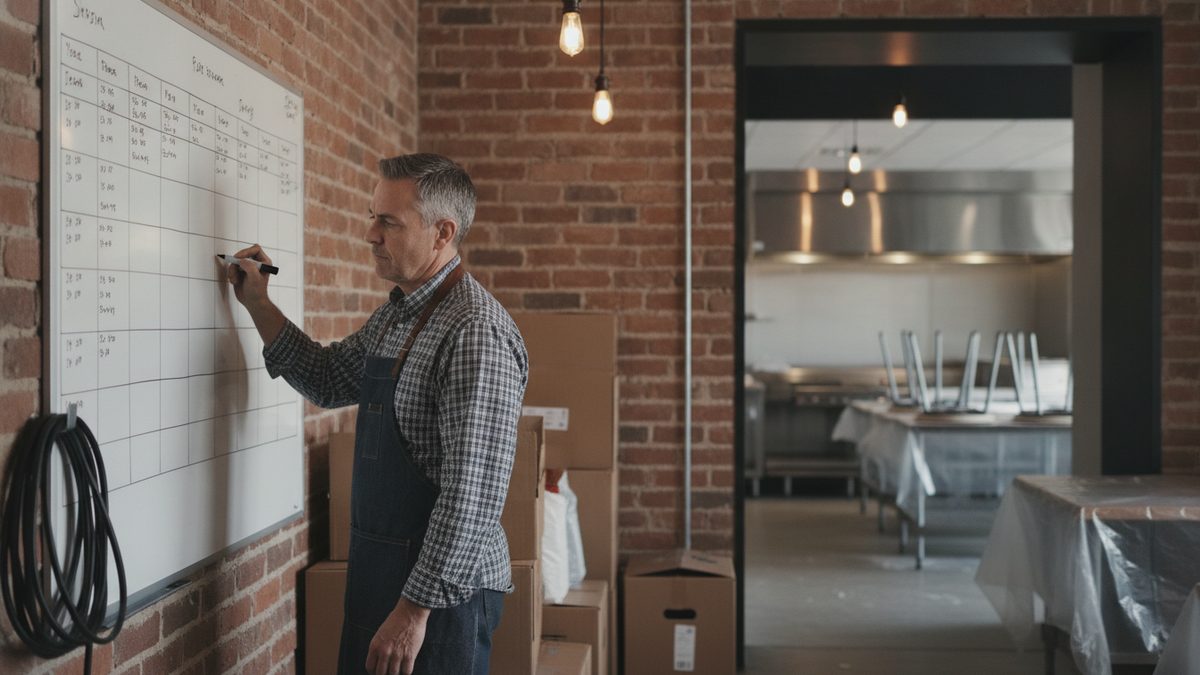
A new restaurant needs about five to ten days of paid pre-opening training: two days for back-of-house and front-of-house to learn their stations separately, two to three days of menu, POS and service practice together, and one to three days of mock service and soft-opening dress rehearsals. Start hired staff one to two weeks before your public opening, and budget the payroll as part of your startup costs, not as an afterthought.
Skipping training is one of the most expensive shortcuts an owner can take. Slow tickets, wrong orders and a confused dining room in week one produce the reviews that follow you for years.
How many training days do you actually need?
The right length depends on the size and complexity of your concept.
| Concept | Staff size | Suggested training | Why |
|---|---|---|---|
| Counter service or cafe | 8-15 | 3-5 days | Simple menu, one POS flow |
| Casual full-service | 20-40 | 6-8 days | Table service, bar, expo coordination |
| Upscale or tasting menu | 25-50 | 8-12 days | Wine knowledge, course timing, plating standards |
| Bar-heavy concept | 15-35 | 6-8 days | Cocktail specs, speed and ID-check protocols |
Managers and the kitchen leadership should start earlier than hourly staff, usually two to three weeks ahead, so they can build prep lists, order par levels and train others. See Your First 90 Days: An Opening Roadmap for where this fits on the master timeline.
A sample eight-day schedule
Adjust this to your concept, but keep the sequence: skills first, then systems, then pressure.
- Day 1: Orientation. Paperwork, culture, safety, sanitation, allergen basics, uniform and policy review. Give everyone the employee handbook before the day starts.
- Day 2: Stations and menu knowledge. The kitchen walks recipes, plating and prep. Servers and bartenders taste every dish and drink, learn ingredients and allergens, and memorize the top sellers.
- Day 3: POS training. Everyone rings in orders, applies modifiers, splits checks, runs voids and closes out. Use the plan in How to Train Staff on a New POS.
- Day 4: Service flow. Greeting, order taking, pacing, food running, table touches and handoffs between FOH and BOH.
- Day 5: Mock service one. Invite staff families or friends, give them a limited menu and practice. Expect mistakes and write them down.
- Day 6: Fix and retrain. Review the mistakes from day five, adjust prep, station layouts and printer routing, then drill the weak spots.
- Day 7: Mock service two. Full menu, full dining room, timed tickets. Track ticket times and send the data to your chefs.
- Day 8: Final walkthrough. Closing procedures, emergency plans, cash handling and a pre-shift meeting that you will repeat every day after opening.
What to train in each department
Kitchen: recipe execution, portion standards, labeling and dating, cooling logs and the cleaning schedule. Connect this with the kitchen cleaning and sanitation schedules you will follow after opening.
Servers and bartenders: menu and allergen knowledge, steps of service, upselling and the POS. Teach upselling techniques as a way to help guests, not push them.
Hosts and support staff: reservation and waitlist systems, phone scripts, takeout handoff and cleaning standards.
Managers: opening and closing checklists, cash controls, scheduling, vendor orders and conflict handling.
Budget the payroll before you hire
Pre-opening payroll is real money with no sales to offset it. A 25-person staff trained for eight days at an average of $17 per hour and six paid hours per day costs about $20,000 plus payroll taxes. Include it in your startup budget and your cash plan. The free worksheet below calculates the full cost from your headcount, wages and days, including employer taxes.
Reduce the bill without cutting quality by training in tiers: key staff first, then the rest in shorter blocks, and pay everyone at least the legal minimum, including for mock services. Unpaid trial shifts can create wage-and-hour liability, so check your state's rules before inviting anyone to "work for free."
Takeaway: Train in this order: skills, systems, then pressure. A staff that has survived two mock services will handle opening night far better than one that learned on real guests.
Use mock service and your soft opening
Mock services are low-stakes rehearsals with friendly guests. A soft opening comes next, with a limited public audience and discounted or invite-only menus. Together they let you test the kitchen, printer routing and table turns while mistakes are still cheap.
Set up the technology early
Your POS should be configured and tested before training begins, with menu items, modifiers, tax rates and printers working. Cobblestone POS is a free, all-in-one POS for independent restaurants with a simple interface that new hires learn quickly, plus its AI assistant, Daisy, for help with setup, so there is no monthly software fee eating into your pre-opening cash. Compare that with Toast, which runs about $470+ per month. See How to Set Up Your Restaurant's Technology Stack for the full list of systems to ready before day one.
Keep training after opening
Training does not end on opening day. Schedule a short retrain at the end of week one and week four, using real feedback and ticket times, and fold new hires into onboarding from then on.
Free Pre-Opening Training Schedule and Payroll Calculator (Excel).