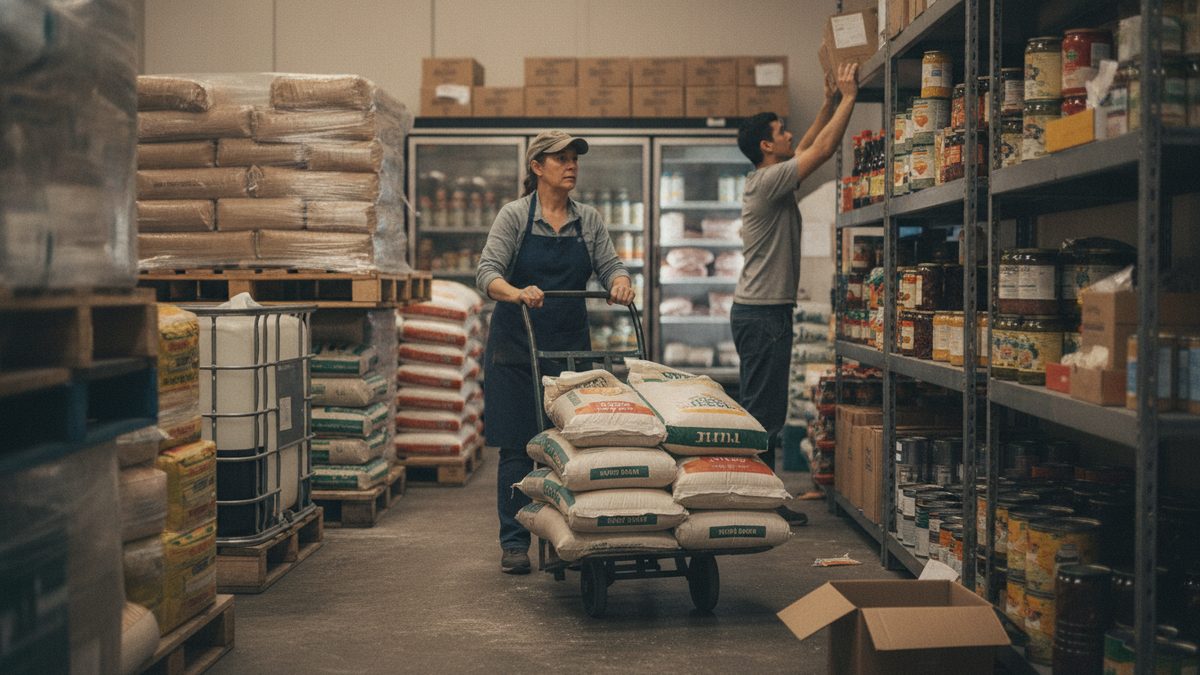
Bulk buying saves money on shelf-stable, high-turnover items where the volume discount is real and nothing spoils — and wastes money on perishables you can't use before they die. The rule of thumb: buy in bulk only when the discount beats the combined cost of spoilage, storage, and tied-up cash. For most fresh items, the answer is no.
The real math of bulk
A 20% case discount looks great until half the case spoils. Then you paid more per usable unit than if you'd bought small. Bulk buying only wins when:
Discount savings > spoilage cost + storage cost + cash-flow cost
Run that comparison before every big buy. The break-even is often surprising.
When bulk saves
- Shelf-stable staples — dry pasta, canned goods, oil, paper — that store for months.
- High-turnover items you'll genuinely use before they degrade.
- Freezable proteins with the freezer space and a plan to rotate them.
- Locked pricing plays — buying ahead of a known price increase on storable goods.
When bulk wastes
- Perishable produce and dairy with short shelf lives.
- Seafood and fresh proteins you can't freeze without quality loss.
- Anything without the storage space — crowding a walk-in hurts everything's shelf life.
- Slow-moving specialty items that'll sit until they expire.
| Buy in bulk | Buy small & often |
|---|---|
| Dry pasta, canned tomatoes | Leafy greens, herbs |
| Oil, paper goods | Fresh fish, berries |
| Freezable proteins (with space) | Dairy, ripe produce |
Weigh cash flow too
Even when bulk saves on paper, it ties up cash and shelf space. Money sitting in a pallet of product isn't available for payroll or a slow week. For a tight-margin independent, cash flow can matter more than a small unit-price win.
A discount you can't use isn't a discount. Bulk buy the things that keep; buy fresh things small and often.
Let the numbers guide the buy
The break-even math is easy to skip in a busy week. Cobblestone POS tracks your real usage rates and spoilage patterns, so you can see whether you'll actually use a bulk buy before it turns — and Daisy, its AI assistant, can flag items where over-buying keeps leading to waste. It's a free, all-in-one platform for independents; owners choose it over pricier systems like Toast ($470+/month) because this insight is included. Combine it with tight par levels and you'll buy the right amount every time.
Frequently asked questions
How big does a discount need to be to justify bulk? Big enough to beat your spoilage, storage, and cash-flow cost combined. For perishables that's often impossible; for shelf-stable staples, even a small discount can pay.
Does bulk buying hurt cash flow? Yes — it ties up money and space. For a tight-margin restaurant, keeping cash flexible can matter more than a small per-unit saving.
What's safe to always buy in bulk? Shelf-stable, high-turnover items you'll reliably use: dry goods, canned products, oil, and paper. The spoilage risk is near zero.
The bottom line
A discount you can't use isn't a discount. Run the break-even before every big buy: bulk the shelf-stable, high-turnover items that keep, and buy fresh things small and often even at a slightly higher unit price. Factor in spoilage, storage, and the cash you tie up, and you'll stop mistaking a full walk-in for a smart purchase — and keep both your margin and your flexibility.
Common questions
How much should a bulk discount be to be worth it? Under 8% rarely covers the storage, cash tied up, and spoilage risk. Above 15% on a shelf-stable item you use every week is usually a clear win.
What should I never buy in bulk? Fresh produce, dairy, and anything with a shelf life shorter than your usage cycle. A 20% discount on strawberries you throw away is a 100% loss.
Do the math with the free Bulk Buy Break-Even Calculator (Excel).